Is the Death Road Safe?
Is the Death Road in Bolivia safe to ride? The UK Foreign Office's lines on bikes, first aid and tour operators, what to check before you book, and what riders report.
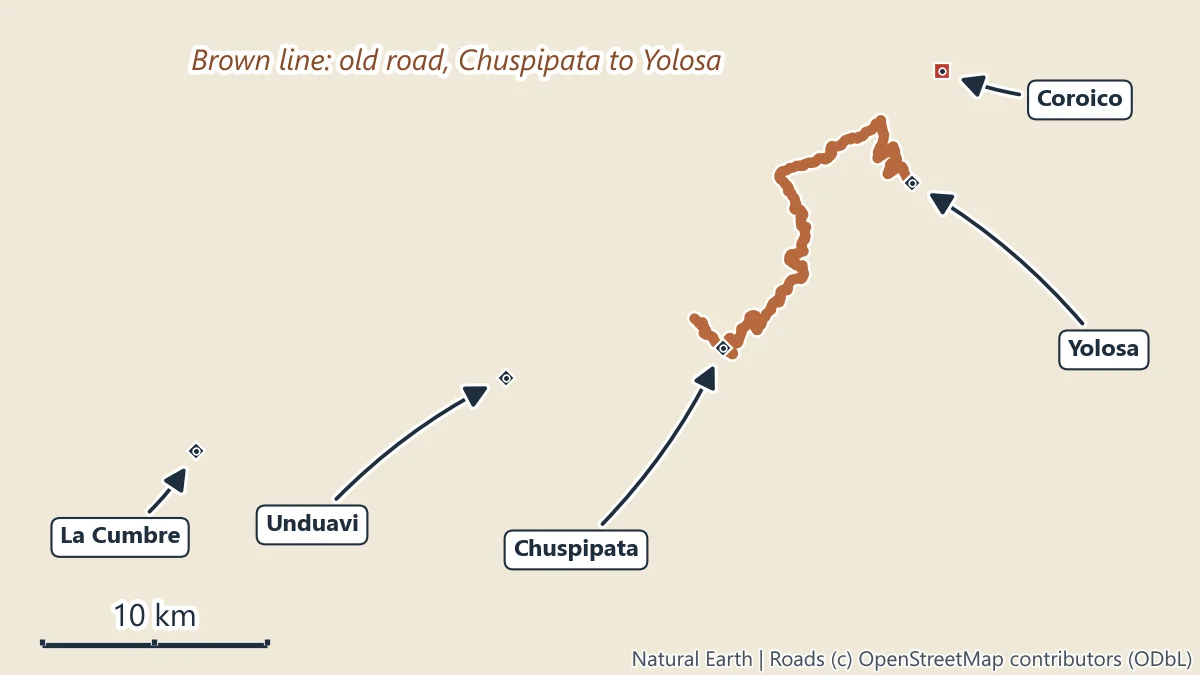
The Death Road is as safe as the bike, the guide and your own pace make it. The UK Foreign Office names the ride in its travel advice for Bolivia: “If you’re mountain biking on the so-called ‘Death Road’, from La Paz to Coroico through the Yungas Valley, make sure the bikes are in good condition. Check your guide is carrying safety equipment and first-aid kit.” The same page says “There are no official minimum standards for tour operators”, so the checking falls to you (FCDO Bolivia safety and security, page updated 22 September 2026, checked 12 November 2026).
What the UK Foreign Office says
The advice sits under adventure activities, which in Bolivia “include mountain biking, salt flat tours and jungle expeditions”. Its lines, in full:
- “There are no official minimum standards for tour operators. Get local advice and only use reputable companies.”
- “Check your travel insurance policy covers you for the activities you’re planning.”
- “If you’re mountain biking on the so-called ‘Death Road’, from La Paz to Coroico through the Yungas Valley, make sure the bikes are in good condition. Check your guide is carrying safety equipment and first-aid kit.”
On the roads in general it adds that “During the rainy season (November to March) there is a risk of landslides and roads can be blocked”, and that “Protestors may block roads. Do not attempt to cross blockades in a motor vehicle or on a motorbike.” Its warning against all but essential travel covers the Chapare region of Cochabamba Department, including Villa Tunari and highway routes 4 and 24; La Paz, the Yungas and Coroico are not in it (checked 12 November 2026).
What to check before you book
The FCDO’s checklist maps onto what each company runs. Check these for the company you are looking at:
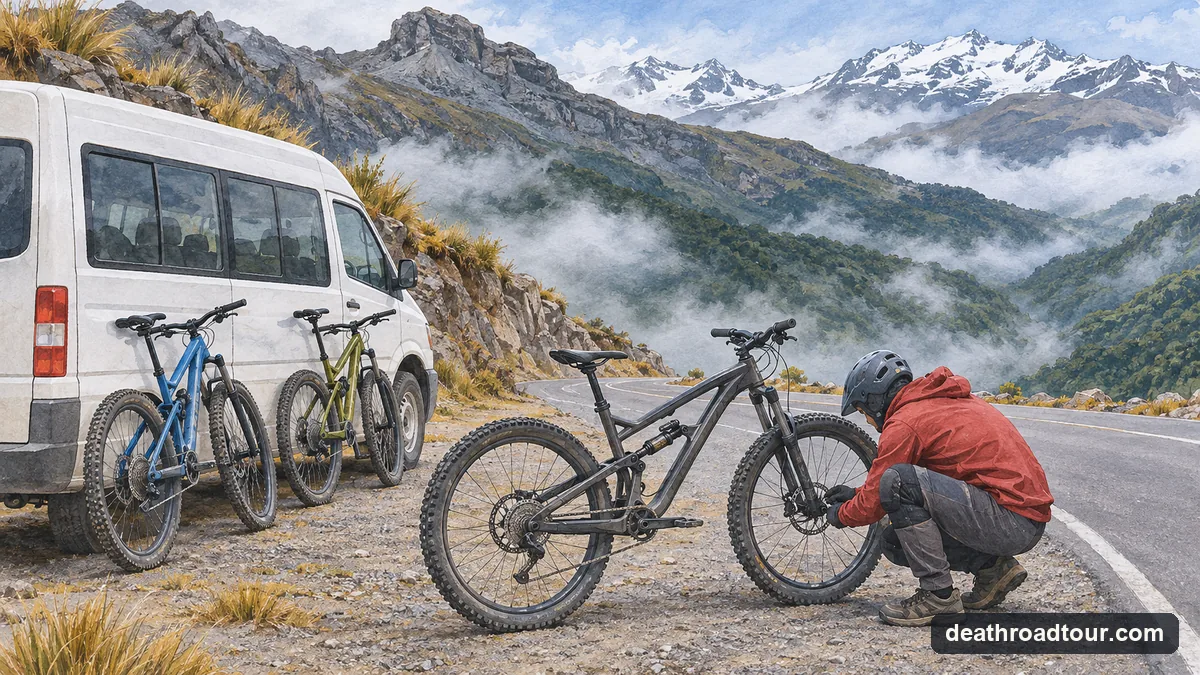
- The bike. Gravity Bolivia rides full-suspension downhill bikes with hydraulic disc brakes, with a mechanic on each tour. BARRACUDA BIKING COMPANY rides Kona full-suspension bikes with hydraulic disc brakes, with the brakes set on the side you are used to. Altitude Travel sells three bike options at three prices. Ask what the bike is and when it was last serviced.
- The guide and the kit. Vertigo Biking has first-aid trained guides. Gravity Bolivia sends 1 guide, 1 mechanic and a private vehicle with each group. Ask about the first-aid kit, as the FCDO advises.
- The group. Gravity Bolivia and BARRACUDA BIKING COMPANY cap a group at 14. Altitude Travel’s activity takes up to 50 travellers on Viator; ask how many ride with each guide.
- A way off the bike. On Gravity Bolivia's ride the bus follows the group down, you can get on at any point, and the guide can put you on it for your own safety or the group’s.
- Insurance. Gravity Assisted Mountain Biking needs your insurance company’s details at booking; BARRACUDA BIKING COMPANY requires medical insurance and sells it through the guide on the day if you have none. Travel insurance is not included on Altitude Travel’s day.
The Death Road bike companies compared sets these lines side by side, company by company.
What riders say
Gravity Bolivia's ride has 523 reviews on GetYourGuide. In the 350 most recent, dated 17 December 2024 to 8 November 2026, at least 34 mention safety or feeling safe, and 5 give three stars or fewer. The only one of those 5 with a comment, a two-star review from 6 November 2026, finds the price high and the lunch poor, and says the guide meant to ride at the back “was mostly in the middle and sometimes just waited for the last person to come in between”. A rider on 10 April 2026, riding in drizzle with no mountain-bike experience, found the old road “scary for me - narrow, and slippery” and slowed right down; the guide stayed with her, and she writes that “it’s better to be slow and safe than have an accident”.
Altitude Travel’s Viator page shows 3,771 reviews from Viator and Tripadvisor, 34 of them at three stars or fewer. Of the 12 written on Viator itself (January 2023 to January 2026), one gives three stars: the rider got a squeaky bike, had a flat tyre about 2 km from the end and fell at low speed, and would book the road again with a different company.
Who should not ride
The listings rule people out in their own terms: pregnant women on every listing here; people who can’t ride a bike (Gravity Bolivia, Vertigo Biking); anyone under 120 cm (Gravity Bolivia) or 155 cm (Vertigo Biking); under-18s on Altitude Travel’s, Gravity Assisted Mountain Biking’s and BARRACUDA BIKING COMPANY’s Viator rides; travellers with poor cardiovascular health on the last two. Altitude Travel’s day needs at least a moderate level of fitness.
The pass at the start is high, and the FCDO’s health page says altitude sickness is a risk in parts of Bolivia, including La Paz.
In the rainy season
From November to March the FCDO warns of landslides and blocked roads, and riders on Gravity Bolivia's ride report drizzle, heavy rain and, on 29 December 2025, snow and rain. The Death Road in the rainy season covers riding then.

A Guide, a Driver, and a Bike You Choose
Altitude Travel's Death Road Bolivia Biking Tour: hotel pickup in La Paz, helmet, pads, gloves, jacket and trousers, the bike you pick when you book, and lunch and a shower at a hotel at the bottom.
Check dates on Viator